
How Arrest Warrants Work in Spalding County
Every Spalding County arrest warrant begins with sworn facts. The complaint claims a crime occurred and names the person accused. Under Georgia arrest-warrant law, a judicial officer must weigh those facts before authorizing an arrest. Probable cause is the test. It asks whether reliable information supports a reasonable belief that the named person committed the offense, a standard well short of trial proof but far beyond suspicion. Where the paper is issued depends on the charge. The Spalding County Magistrate Court handles criminal-warrant applications, pre-warrant hearings, and search warrants. Felony cases go to the Superior Court of the Griffin Judicial Circuit. State Court takes below-felony matters. Griffin Municipal Court handles city cases, and sheriff deputies and police officers execute what the judges sign.
Spalding Arrest Warrant Applications
Magistrate Court is the front door for most Spalding County warrant applications. An officer may bring a sworn complaint or affidavit straight to a judge. Private citizens can apply too. Georgia procedure then calls for notice and a pre-warrant hearing before any ruling, giving the judge sworn facts to weigh against the probable-cause standard. That Spalding County hearing is not a trial. The criminal division answers at 770-467-4320. Filing a complaint alone creates nothing. Judicial review turns it into an arrest warrant. Anyone who receives hearing notice should seek legal advice about appearing rather than ignore it. Once signed, the warrant may sit with a sheriff or police agency until service.
Key point: A sworn application starts the process, but only an authorized judicial officer may issue an arrest warrant after finding probable cause.
Arrest Warrants: What They Contain
A full Spalding County warrant file can hold more than Sheriff2Citizen shows: the clerk record may list the sworn basis, issuing court, service return, and bond decision. The public wanted grid shows less. It offers name, charge, paper type, address, and agency. A blank field there is no sign the legal file omits that fact.
| Named Person | The defendant's name and available identifying descriptors. |
|---|---|
| Charge and Level | The alleged offense, statute, and felony or misdemeanor class. |
| Issuing Authority | The court or judge that made the probable-cause finding. |
| Paper Data | The issue date, paper type, and available case or warrant number. |
| Agency and Service | The holding agency and later service or return information. |
| Bond Direction | A bond amount, type, or no-bond order when set by the court. |
For a Spalding County match, confirm through the issuing court, since the public grid is only an access aid and not the signed warrant itself.
Spalding Arrest Warrant Grid Limits
The Sheriff2Citizen Wanted Search lets you query by last, first, and middle name, plus age range, race, sex, and a Griffin location or radius. Results can show charge, paper type, address, and agency. It promises no warrant number, judge, bond, status, or case number. Those come from the warrant unit or clerk. Updates run on a schedule. A new warrant may not appear yet, and municipal, juvenile, sealed, or restricted matters move through other channels. The Spalding County JustFOIA portal offers a formal records-request route, though law-enforcement exemptions can force redaction or withholding. A blank result is not proof. Only the sheriff or issuing court can say no Spalding County arrest warrant exists.
How Warrants Get Served in Spalding County
Serving warrants in Spalding County falls largely to the sheriff's Fugitive Apprehension Unit. It works outstanding felony, misdemeanor, contempt, and probation papers. Its roster includes a lieutenant, a sergeant, and three deputies. Griffin Police keeps its own Warrant Division, handling Griffin Municipal Court papers and bringing back wanted people arrested elsewhere. The holding agency often decides where booking happens. Service can come at a residence, during a traffic stop, through contact on another matter, or by planned surrender. Officers confirm identity, make the arrest, and deliver the person for booking. Release then follows the court's bond order. An arrest does not resolve the charge. It places the accused under court authority so the Spalding County case can proceed.
Spalding Arrest Warrant Activity
The sheriff reports unit activity, not a live count of open Spalding County warrants. The Fugitive Apprehension numbers are service totals. They list 8,616 warrants served in 2022. Another 7,010 followed in 2023. Those figures show a heavy service workload, but they cannot reveal how many arrest warrants remain active now, since one person can carry several papers.
Treat the totals as history only; current Spalding County warrant status comes straight from the sheriff or the issuing court.
Arrest Warrants, Summonses, and Bench Warrants
These papers demand different responses. A probable-cause arrest warrant authorizes custody for a new alleged offense, while a summons orders an appearance without directing any arrest. A bench warrant follows a missed court date or a disobeyed court order. The Spalding County bench warrant lookup covers that process.
| Feature | Arrest Warrant | Summons | Bench Warrant |
|---|---|---|---|
| Basis | Probable cause of an offense | Charge begun by notice | Failure to appear or comply |
| Command | Take the person into custody | Appear on a date | Bring the person before court |
| Response | Counsel, surrender, bond review | Appear as directed | Seek recall, reset, or appearance |
A sealed indictment can also bring a Spalding County arrest without any public trace. The paper stays hidden until the court permits access.
Planning Spalding Arrest and Bond
Before walking into any Spalding County office, learn what the paper actually says. Confirm the charge, the issuing court, and whether bond has been preset. Walking in unprepared can mean immediate custody. A lawyer can call the right court, check the bond posture, and arrange a controlled surrender. No caller can promise that an arrest will not happen. Spalding County detention accepts cash, property, a professional bonding company, or transfer arrangements when the court allows release, and sheriff materials note a $20 bond fee. Property bonds require ownership and value documents. Bond is a release condition, not payment of a criminal charge, and a no-bond order takes judicial action to change. The Clerk of State and Superior Court contact page names the criminal contacts who can answer these questions directly.
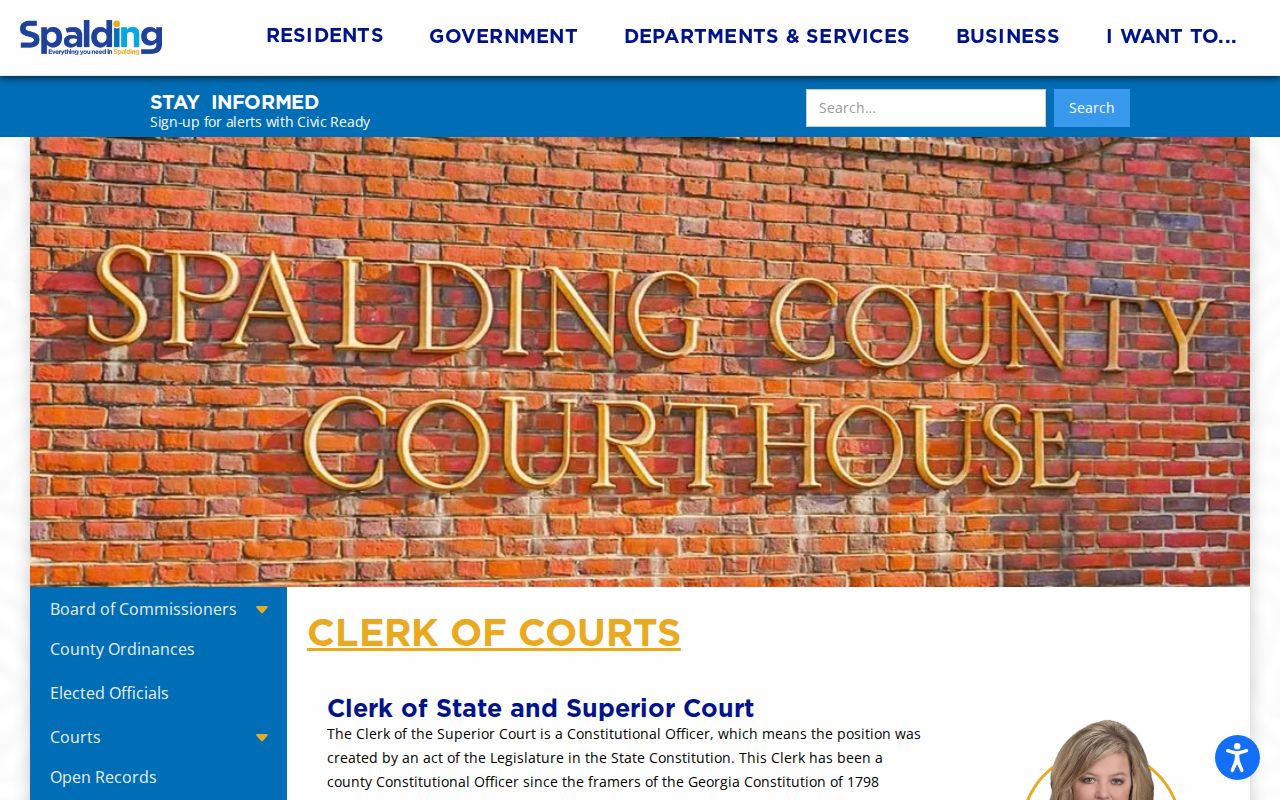
The official contact block routes a Spalding County warrant confirmation to the division that keeps the court record.
Spalding Arrest Warrant Court Routing
Spalding County splits warrant work by court. Superior Court tries felonies. State Court handles misdemeanors below felony grade, while Magistrate Court reviews warrant applications and defined lower-level matters. Griffin Municipal Court keeps the city traffic and ordinance files. Juvenile records face strict access limits. The right office follows the issuing paper, not the place of arrest. The official court directory lists the criminal and traffic filing contacts.
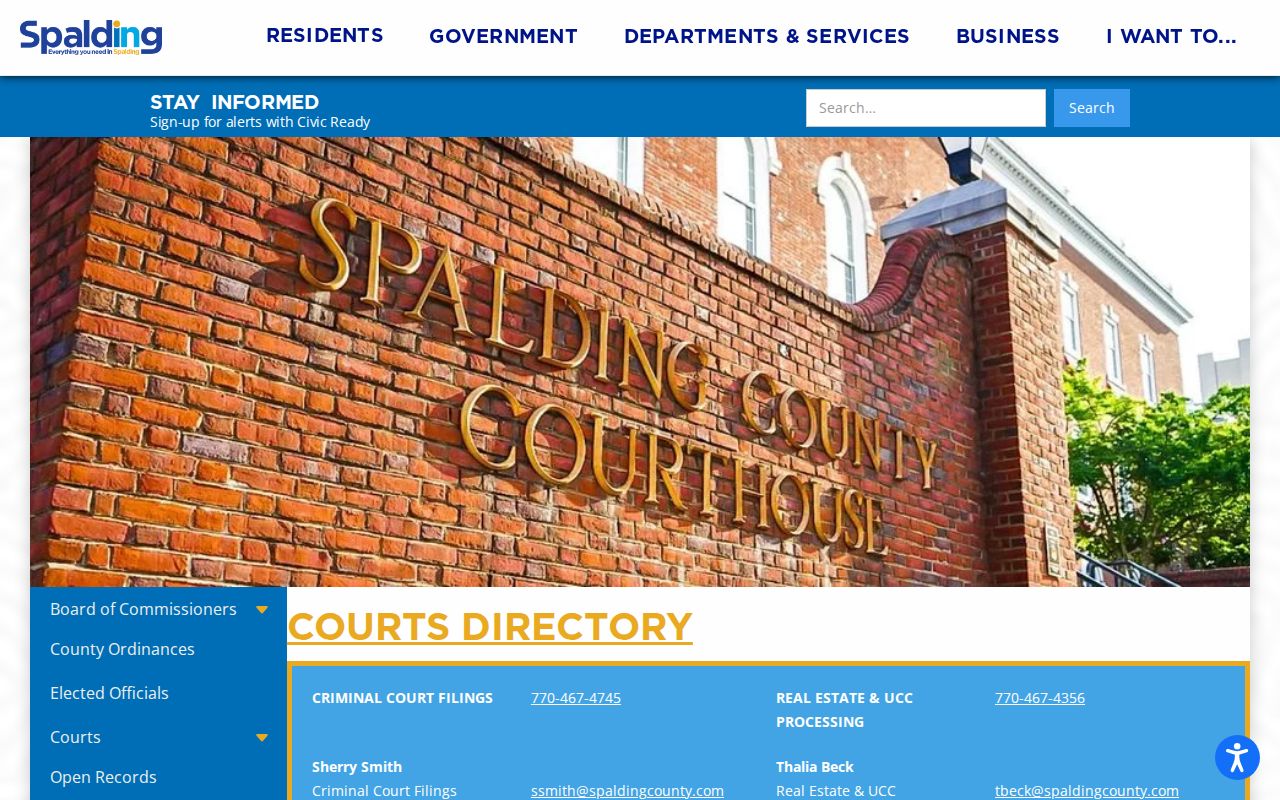
Start with the directory. It points to the Spalding County clerk who can confirm a warrant file and the court that can act on bond or recall.
- Recall
- An order withdrawing an unserved warrant.
- Quash
- An order ending a warrant's legal force.
- Return
- The officer's record of service.
- Bond
- A court-approved release condition while a case continues.
Handling an Arrest Warrant in Your Name
Confirm the match with the warrant unit and the issuing court. Have the full legal name, birth date, and any case number ready. Ask whether the Spalding County warrant is active, whether bond has been set, and which office controls the next step. Paying a fee or leaving a message does not clear the paper. Vanishing from a web list does not either.
- Speak with a criminal-defense lawyer about the charge, court, bond, and safest surrender plan.
- Arrange a voluntary walk-in only after counsel and the agency confirm the route.
- Prepare the approved bond method and documents if release is allowed.
- Ask whether grounds support a motion to recall or quash the warrant.
- After court action or booking, obtain confirmation that the warrant is cleared.
Important: An active arrest warrant can lead to custody during any law-enforcement contact. Get legal advice before appearing in person.
The Spalding County warrant records overview explains how court and sheriff channels fit together.